Tap early
Tapping feels like losing the moment – but not tapping often costs you the session. The BJJ habit of resetting early, and what it teaches about design decisions: killing the prototype in week two rather than week six, scrapping the direction after one bad research session rather than three.
Originally written Dec 2025
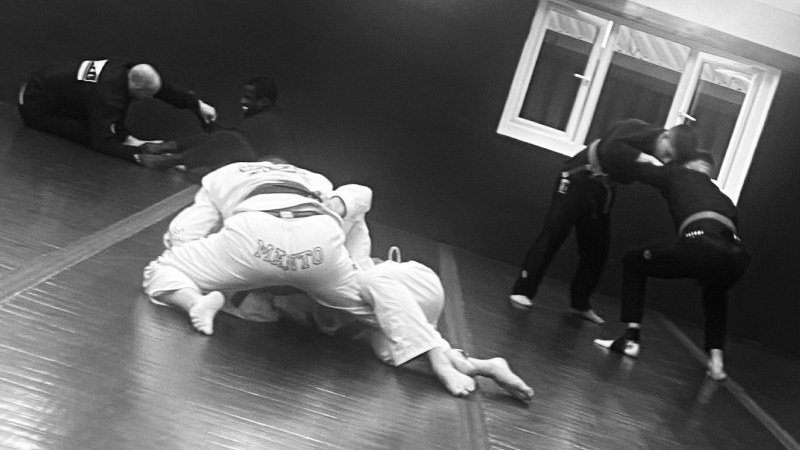
There's a position in BJJ where you know you're losing, but you haven't lost yet. You're being choked, or your arm is getting extended, and the position is deteriorating – but you haven't tapped. You're holding on. I held on for a long time before I learned to stop holding.
Not because I thought I could escape – the position was gone, and somewhere I knew it. I held back because tapping felt like losing. Like admitting a mistake that was visible to the person on top of me and everyone on the mat. The move I needed was to tap, reset, and try from a better starting position. The move I was making was to delay that reset until it was too late, by which point I'd been caught in something worse.
What tapping actually means
Tapping isn't losing. It's a reset.
In BJJ, the tap ends the position, not the session. Both people reset. You try again from a neutral starting point, which is always better than continuing from a position you've already lost. The experienced grappler taps the moment they feel the lock going on – not when it's fully applied. The white belt holds until it's fully applied, and there's no choice. The timing difference is everything.
Tapping early gives you options. Tapping late takes them away. The person who taps quickly at the first sign of a bad position gets to practise recovery from an early stage. The person who holds gets to experience being controlled in an increasingly bad situation with increasingly fewer routes out. One of those is a useful session. The other is a painful one with the same outcome.
The design equivalent
I've held bad design positions for too long in the same way. A prototype that isn't working. A direction the research doesn't support. A feature that's being built because it was scoped, not because it's right. The signals are there early – inconsistency in user sessions, pushback from a stakeholder who's usually supportive, and a quietness in the team when you talk about it. I've sometimes treated those signals like the choke going on: I knew it was coming, kept going anyway, and waited until the position was fully applied before I tapped.
The design equivalent of tapping early is saying "this isn't working" at the first clear signal rather than at the point where it's unavoidable. Killing a prototype in week two rather than week six. Scrapping a direction after one bad research session rather than three.
The work lost is always less than it feels. The work saved is always more.
Why early beats late
The argument for holding on is sunk cost. You've invested in this position. You've built the prototype, written the brief, and aligned the stakeholders. Tapping means that the investment disappears.
The argument for tapping early is that the investment is the same whether you tap at week two or week six. What's different is week four and five; you'd have spent them on a position you already knew was gone. The sunk cost doesn't rescue the position. It just makes tapping later feel like a bigger loss than it is.
The designers I learn most from tap quickly. Not because they're less committed, but because they're better at distinguishing between a position that's recoverable and one that isn't. That discernment builds with experience – and with the practice of actually tapping, resetting, and discovering that the next attempt is usually better for what you learnt from the one you stopped.
A note on tapping
Tapping gets easier once you've tapped enough to see the pattern. The position you escape from by holding on is rare. The position you hold until it collapses and then have to start from worse is common. Tapping feels like losing the moment. Not tapping often costs you the session.
The same is true at the desk. The designer who kills things early ships better work – not because they're less invested, but because they're spending their investment on attempts that have a chance, not on ones where the outcome is already decided.
Tap early. Try again. The next attempt is always from a better position than the one you refused to leave.