Am I actually any good?
Sixteen months in, and I feel as useless as a four-week white belt – the nail everyone else gets their reps on, watching people I started with earn blue belts I'm nowhere near. So is it worth it? I went looking at what the science and the sport actually say about the plateau, quitting, and whether feeling this lost is normal. It is.
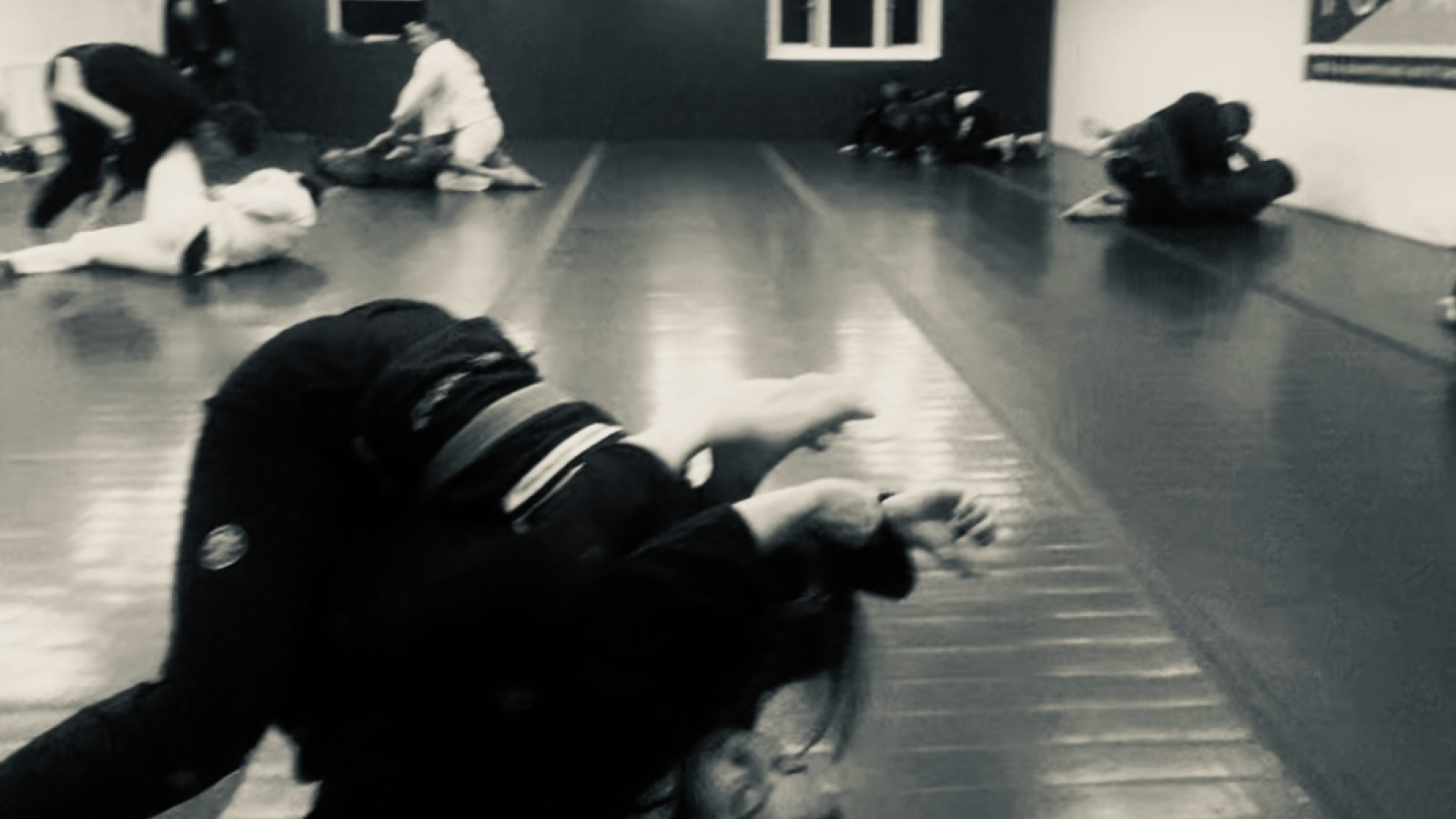
He'd been promoted the week before – all knees and elbows, throwing everything at me with no idea what happens next. His knee came up, my thumb was in the wrong place, and that was that. Two weeks off, and counting.
What the fortnight actually gave me was time to sit with a question I'd been outrunning. Not should I take a break, but the bigger one underneath it: am I any good, and will I ever be? Because sixteen months in, I feel about as capable as the lad who jammed my thumb. Four weeks as a white belt, fresh off the beginners' course, and rolling with him doesn't feel like the gulf that sixteen months is supposed to buy you.
The honest version
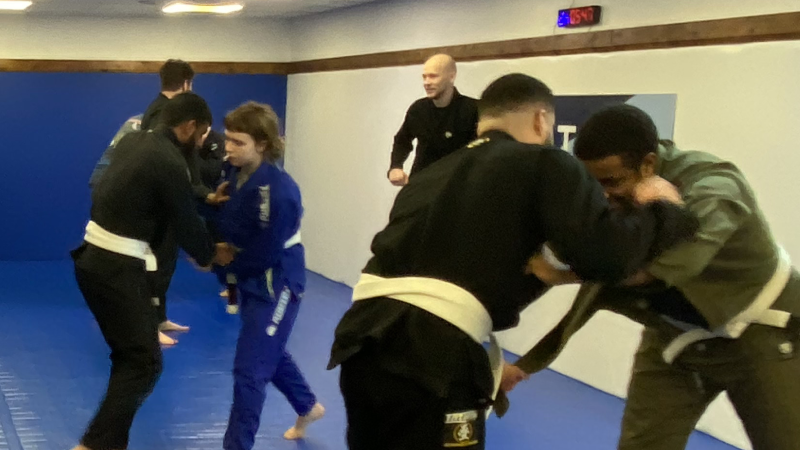
Let me say the ugly bit out loud, because pretending it isn't there is how it festers. I feel like the nail, and everyone else is the hammer. The new white belts are dangerous precisely because they're clueless, athletic, and have nothing to lose, so they spaz into things I should be shutting down, while the blue belts have just enough game to turn me into a heavy bag. I catch it from both directions, every session.
And I watch people get their blue belts – people who started around when I did, or after. I clap them in, and I mean it, then I drive home doing the maths on how they got there, and I didn't, knowing, not guessing, that I'm nowhere near that level. So the question sharpens into something colder. Is it worth going three, four, five times a week to feel like this? To be the guy everyone gets their reps in on? That's the state I was in when the knee found the thumb, which is why I don't fully trust my own relief at having a reason to stay home.
What I found when I looked it up
So I did the thing I always do when I'm stuck in my own head. I went and checked whether the story I was telling myself was true, and it mostly isn't. The biggest thing I found is almost embarrassing in how obvious it is once you see it: this feeling is so normal it has names. The white-belt plateau. The wall that lasts somewhere between six and eighteen months. The overwhelming majority of people who ever quit jiu-jitsu quit at the white belt, and they quit feeling exactly this – not injured, not busy, just convinced they're no good and it isn't moving. I'm not lost in some unusual way. I'm standing in the most crowded room in the building.
It helped to understand where sixteen months actually sits, too. It's no man's land and a rough place to stand. I'm good enough now to be a genuine training partner, so nobody takes it easy on me, but I'm not good enough to control what happens – the worst of both worlds, and a phase on the timeline rather than a verdict on the ceiling. Blue Belt often lands at two to three years. I've been measuring my middle against other people's milestones, which is a rigged game before it starts.
The "not improving" feeling turns out to be partly a trick as well. As you get better, your standard for good climbs faster than your actual ability does, so you feel flat while you're still improving because the target keeps running ahead of you. The white belts next to me are improving off a low base where every gain is steep and obvious; mine have gone quiet and subtle. The people I roll with can see it. I can't. That's not me lying to myself – it's just how the curve feels from the inside. And underneath all of it was a flat physical truth I'd been ignoring: I'd gone off the boil before the thumb, inconsistent and under-recovered, forty, eating in a deficit to shift weight. Nobody improves while they're fried. I hadn't been failing to improve so much as showing up empty and calling it training.
The guilt was telling me I might just be untalented. What I actually am is depleted, comparing wrong, and standing at the exact spot on the map where nearly everyone gets lost.
What changed?
Here's what the reading untangled, and it's the most useful thing I've got out of two weeks off. I'd fused two questions into one – am I any good, and am I fried, and am I comparing myself against the wrong people – and from the inside, they feel identical. They're not. Ask a depleted, plateaued, thumb-sore version of me whether I'm any good and he'll always say no. Depletion lies, and it doesn't get a vote on the big question.
The big question has a flatter answer than I wanted, though. Getting good at this is, overwhelmingly, a function of not quitting – not talent, not being a natural, not being athletic at forty. The people with blue belts around their waist are, mostly, just the people who didn't stop turning up. It's almost insultingly simple, and everything I read backs it. The layoff barely dents it either: the biggest study going found trivial strength loss out to about a month off, and the skill itself, the timing and the grips, holds far longer than that. Nothing I built is gone. I just have to go back.
A note on staying
The whole point of my game has been the long haul – sustainable, unhurried, still rolling in twenty years. It's easy to believe in that when you're winning rounds and feeling sharp. This is the part it was actually built for: the flat, doubting, everyone's-catching-me stretch where the honest answer to 'Am I any good?' is not yet, and that's fine.
The way out isn't dramatic. Heal the thumb, go back, and be on the mats in six months when the lad who jammed it has hit his own wall. That's the entire trick, and I nearly talked myself out of it over a sore thumb and a bad month.