Showing up is most of it
Wednesday: four taps in five minutes. Thursday: I went back anyway. The one consistent thing about improvement – at BJJ and in seventeen years of product design – is that the gap between sessions matters more than any breakthrough in a single one.
Originally written Jun 2025
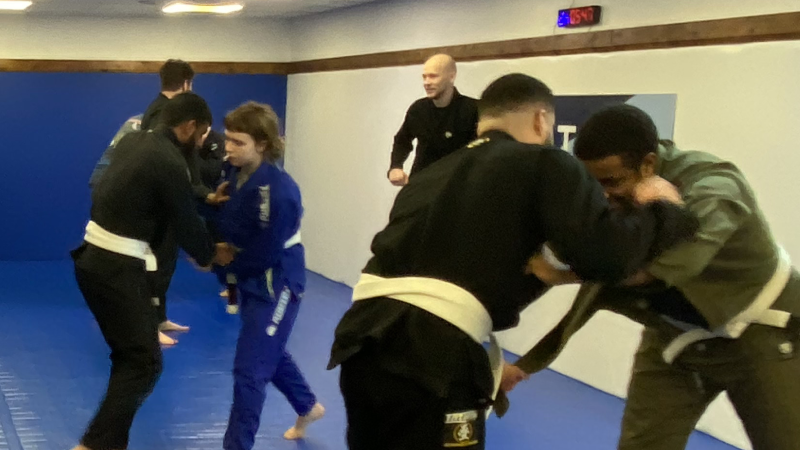
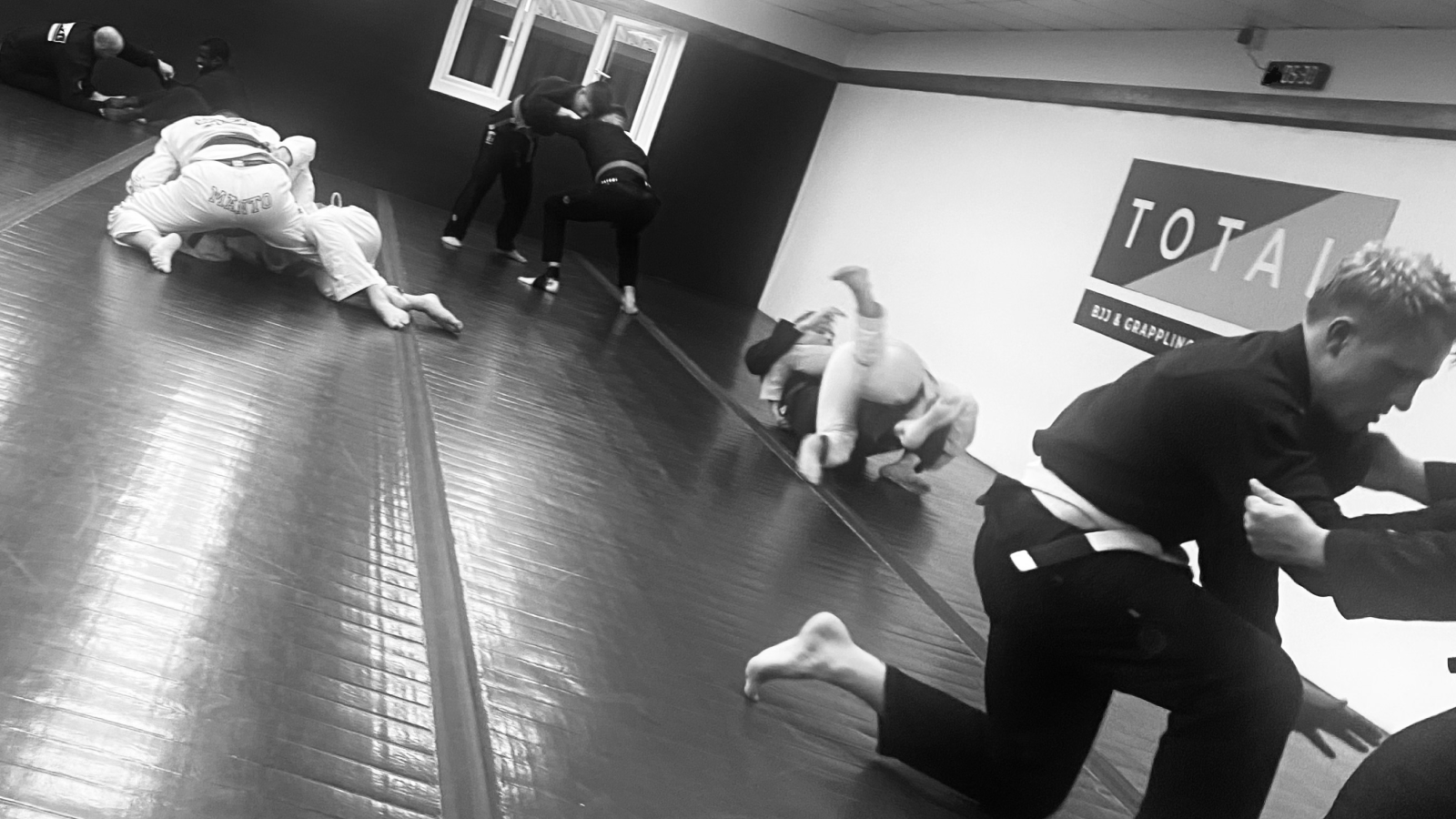
Wednesday evening. I got submitted four times in five minutes. Not by the same person – by four different people, in four different ways, each with a technique I'd had no answer for.
I drove home thinking about it. Not useful – just replaying the taps. The positions I'd been in. The moments where I had no idea what to try. Thursday, I went back.
Not because I'd figured anything out. Not because I had a plan. Because the one thing I know about getting better at something difficult is that the gap between Wednesday and Thursday matters more than the technique you learn next.
What showing up actually teaches
At white belt, improvement rarely comes from technique breakthroughs. It comes from pattern recognition that builds slowly through repetition. The third time you're in a bad position and survive it, something clicks that couldn't have clicked after the first time. The fifth time you drill a guard retention sequence, a movement that required conscious thought starts to feel slightly less deliberate. That process doesn't happen in a session. It happens across sessions.
Showing up is the mechanism. Technique is the vehicle, but consistency is what actually takes you somewhere. This isn't a motivational observation – it's a mechanical one. The nervous system needs repetition at a frequency that doesn't allow the pattern to decay. A session every two weeks doesn't compound. Three sessions a week does.
The design equivalent
Seventeen years in product design. I've had weeks that felt genuinely significant – a research finding that reshaped a project, a design decision that turned out to be right for reasons I didn't fully understand at the time, and a piece of feedback that changed how I thought about something permanently. Those weeks are real.
But they're not what seventeen years is. Seventeen years is mostly showing up – reading something in the morning about a domain I'm trying to understand, reviewing a design more carefully than it strictly requires, and asking the question in a meeting that turned out to be the right one. Compound improvement, accumulated across days that felt individually unremarkable.
The junior designer who improves fastest isn't the one who has the most breakthroughs. It's the one who has the most consistent practice. That doesn't change as you become more senior. It just becomes less visible because senior-level consistency looks less like drilling and more like the accumulation of considered choices – a pattern library in your head that no amount of reading about a domain would produce, built only through repeated exposure.
What compounds
Consistency compounds in ways that are easy to underestimate before they start and easy to undervalue while they're happening.
At six months of BJJ, I can feel moves my body couldn't have understood at week two. Not because I remember a specific teaching moment, but because I've repeated variations of similar positions enough times that my nervous system started anticipating them. The same thing happens in design. Six months of working in a domain builds an instinct for what will work that no amount of studying the domain can produce. You start seeing things in a design review that you'd have missed before – not because you're cleverer, but because you have more sessions logged.
The people who seem to understand everything quickly are usually the ones who've been showing up quietly for a long time. The insight looks instant.
The mat time isn't.
A note on showing up
I get submitted more than I tap people out. Some weeks, significantly more. The ratio doesn't bother me the way it did at the start – partly because I'm more comfortable being a beginner at something, and partly because I've been doing this long enough to see that the ratio shifts over time.
Not because I'm getting dramatically better in any single session. Because I keep turning up.
That's the whole thing, really. Not the techniques I learn, not the sessions that go particularly well, not the moments of figuring something out. The thing that moves the needle is the Thursday after Wednesday.